General
May 30, 2026
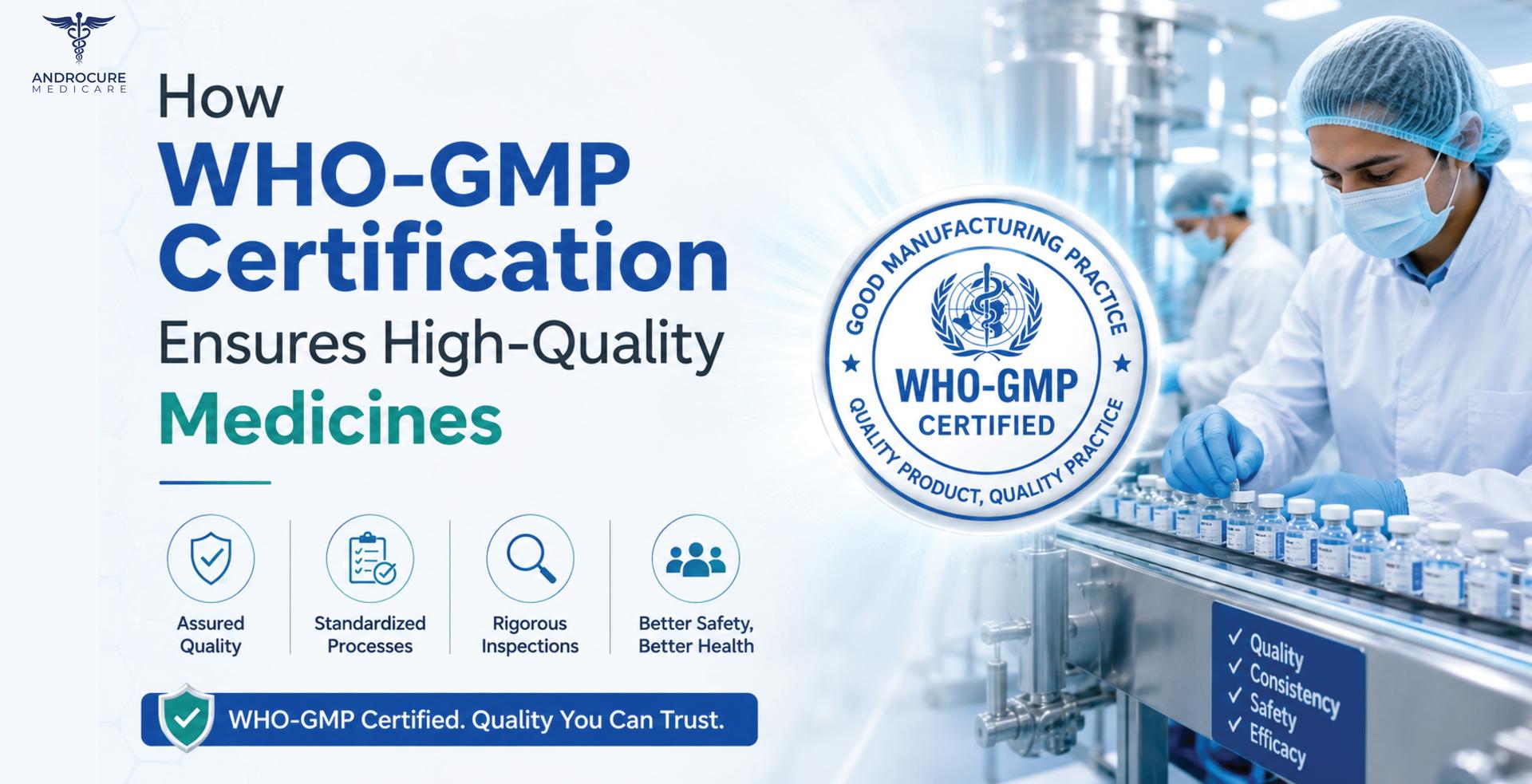
How WHO-GMP Certification Ensures High-Quality Medicines
In the pharmaceutical industry, quality is not optional-it is essential. Patients, healthcare professionals, and regulatory authorities rely on pharmaceutical manufacturers to deliver safe, effective, and high-quality medicines consistently. One of the most recognized standards that demonstrates a company's commitment to quality manufacturing is the WHO-GMP (World Health Organization – Good Manufacturing Practices) Certification.
WHO-GMP certification serves as a benchmark for pharmaceutical companies, ensuring that medicines are manufactured, tested, stored, and distributed according to strict international quality standards. For pharmaceutical manufacturers like Androcure Medicare Pvt. Ltd., maintaining WHO-GMP compliance reflects a strong commitment to product quality, patient safety, and global healthcare standards.
WHO-GMP certification serves as a benchmark for pharmaceutical companies, ensuring that medicines are manufactured, tested, stored, and distributed according to strict international quality standards. For pharmaceutical manufacturers like Androcure Medicare Pvt. Ltd., maintaining WHO-GMP compliance reflects a strong commitment to product quality, patient safety, and global healthcare standards.
What is WHO-GMP Certification?
WHO-GMP stands for **World Health Organization Good Manufacturing Practices**. These guidelines are designed to ensure that pharmaceutical products are consistently produced and controlled according to quality standards suitable for their intended use.
The certification covers every aspect of pharmaceutical manufacturing, including:
Manufacturing facilities and infrastructure
Equipment validation and maintenance
Quality control procedures
Employee training and hygiene
Documentation and record keeping
Raw material sourcing and testing
Packaging and labeling standards
Storage and distribution practices
By following these guidelines, pharmaceutical companies can minimize risks that may affect product quality and patient safety.
Why WHO-GMP Certification Matters
1. Ensures Consistent Product Quality
WHO-GMP-certified facilities follow standardized manufacturing processes that ensure every batch of medicine meets the same quality specifications. This consistency helps maintain the effectiveness and reliability of pharmaceutical products.
2. Enhances Patient Safety
Patient safety is the primary objective of WHO-GMP guidelines. Strict quality control measures help prevent contamination, mix-ups, manufacturing errors, and product defects that could potentially harm patients.
3. Strengthens Regulatory Compliance
Regulatory authorities across many countries recognize WHO-GMP standards. Compliance demonstrates that a manufacturer follows internationally accepted pharmaceutical production practices and quality requirements.
4. Builds Trust and Credibility
Healthcare providers, distributors, and consumers prefer medicines produced in certified manufacturing facilities. WHO-GMP certification strengthens a company's reputation and demonstrates its commitment to excellence.
5. Supports Global Market Expansion
Many international markets require pharmaceutical products to be manufactured in GMP-compliant facilities. WHO-GMP certification helps companies access export opportunities and establish a stronger global presence.
Key Components of WHO-GMP Compliance
Quality Management System
A comprehensive quality management system ensures that every stage of production is monitored, documented, and continuously improved. This helps maintain high standards throughout the manufacturing process.
Trained and Qualified Personnel
Employees play a critical role in pharmaceutical manufacturing. WHO-GMP requires regular training programs to ensure personnel understand quality procedures, hygiene practices, and operational protocols.
Controlled Manufacturing Environment
Manufacturing areas must be designed to minimize contamination risks and maintain optimal environmental conditions. Proper sanitation, air filtration, and facility maintenance are essential components of GMP compliance.
Stringent Quality Control Testing
Raw materials, in-process products, and finished medicines undergo rigorous testing to verify quality, safety, purity, and efficacy before reaching the market.
Documentation and Traceability
Accurate documentation ensures complete traceability of every batch produced. This allows manufacturers to identify, investigate, and address any quality concerns quickly and effectively.
How Androcure Medicare Maintains High Manufacturing Standards
At Androcure Medicare Pvt. Ltd., quality remains at the core of every manufacturing process. The company follows strict quality assurance protocols and adheres to internationally recognized manufacturing practices to ensure the highest standards of pharmaceutical production.
Key quality-focused initiatives include:
Advanced manufacturing infrastructure
Strict quality control and quality assurance systems
Comprehensive product testing procedures
Skilled and trained pharmaceutical professionals
Compliance with industry regulations and international standards
Continuous process monitoring and improvement
Through these practices, Androcure Medicare consistently delivers pharmaceutical products that meet customer expectations and support healthcare needs across various markets.
Benefits for Healthcare Providers and Patients
WHO-GMP-certified pharmaceutical products offer several advantages:
Reliable product quality
Enhanced safety and efficacy
Reduced risk of contamination
Greater confidence among healthcare professionals
Improved patient outcomes
Consistent therapeutic performance
These benefits contribute to stronger healthcare systems and improved patient trust in pharmaceutical products.
The Future of Quality Manufacturing
As the pharmaceutical industry evolves, quality expectations continue to increase. Regulatory authorities, healthcare providers, and consumers demand greater transparency, safety, and manufacturing excellence.
WHO-GMP certification will remain a critical foundation for pharmaceutical companies seeking to deliver high-quality medicines while meeting global healthcare standards. Companies that invest in robust quality systems today are better positioned to serve patients and expand into international markets tomorrow.
Conclusion
WHO-GMP certification is more than a regulatory requirement—it is a commitment to quality, safety, and patient well-being. By ensuring strict manufacturing controls, rigorous testing procedures, and continuous quality improvement, WHO-GMP standards help pharmaceutical companies produce medicines that healthcare professionals and patients can trust.
At **Androcure Medicare Pvt. Ltd.**, quality remains a driving force behind every product manufactured. Through adherence to internationally recognized standards and a dedication to excellence, the company continues to contribute to safer healthcare solutions and improved patient outcomes worldwide.
WHO-GMP stands for **World Health Organization Good Manufacturing Practices**. These guidelines are designed to ensure that pharmaceutical products are consistently produced and controlled according to quality standards suitable for their intended use.
The certification covers every aspect of pharmaceutical manufacturing, including:
Manufacturing facilities and infrastructure
Equipment validation and maintenance
Quality control procedures
Employee training and hygiene
Documentation and record keeping
Raw material sourcing and testing
Packaging and labeling standards
Storage and distribution practices
By following these guidelines, pharmaceutical companies can minimize risks that may affect product quality and patient safety.
Why WHO-GMP Certification Matters
1. Ensures Consistent Product Quality
WHO-GMP-certified facilities follow standardized manufacturing processes that ensure every batch of medicine meets the same quality specifications. This consistency helps maintain the effectiveness and reliability of pharmaceutical products.
2. Enhances Patient Safety
Patient safety is the primary objective of WHO-GMP guidelines. Strict quality control measures help prevent contamination, mix-ups, manufacturing errors, and product defects that could potentially harm patients.
3. Strengthens Regulatory Compliance
Regulatory authorities across many countries recognize WHO-GMP standards. Compliance demonstrates that a manufacturer follows internationally accepted pharmaceutical production practices and quality requirements.
4. Builds Trust and Credibility
Healthcare providers, distributors, and consumers prefer medicines produced in certified manufacturing facilities. WHO-GMP certification strengthens a company's reputation and demonstrates its commitment to excellence.
5. Supports Global Market Expansion
Many international markets require pharmaceutical products to be manufactured in GMP-compliant facilities. WHO-GMP certification helps companies access export opportunities and establish a stronger global presence.
Key Components of WHO-GMP Compliance
Quality Management System
A comprehensive quality management system ensures that every stage of production is monitored, documented, and continuously improved. This helps maintain high standards throughout the manufacturing process.
Trained and Qualified Personnel
Employees play a critical role in pharmaceutical manufacturing. WHO-GMP requires regular training programs to ensure personnel understand quality procedures, hygiene practices, and operational protocols.
Controlled Manufacturing Environment
Manufacturing areas must be designed to minimize contamination risks and maintain optimal environmental conditions. Proper sanitation, air filtration, and facility maintenance are essential components of GMP compliance.
Stringent Quality Control Testing
Raw materials, in-process products, and finished medicines undergo rigorous testing to verify quality, safety, purity, and efficacy before reaching the market.
Documentation and Traceability
Accurate documentation ensures complete traceability of every batch produced. This allows manufacturers to identify, investigate, and address any quality concerns quickly and effectively.
How Androcure Medicare Maintains High Manufacturing Standards
At Androcure Medicare Pvt. Ltd., quality remains at the core of every manufacturing process. The company follows strict quality assurance protocols and adheres to internationally recognized manufacturing practices to ensure the highest standards of pharmaceutical production.
Key quality-focused initiatives include:
Advanced manufacturing infrastructure
Strict quality control and quality assurance systems
Comprehensive product testing procedures
Skilled and trained pharmaceutical professionals
Compliance with industry regulations and international standards
Continuous process monitoring and improvement
Through these practices, Androcure Medicare consistently delivers pharmaceutical products that meet customer expectations and support healthcare needs across various markets.
Benefits for Healthcare Providers and Patients
WHO-GMP-certified pharmaceutical products offer several advantages:
Reliable product quality
Enhanced safety and efficacy
Reduced risk of contamination
Greater confidence among healthcare professionals
Improved patient outcomes
Consistent therapeutic performance
These benefits contribute to stronger healthcare systems and improved patient trust in pharmaceutical products.
The Future of Quality Manufacturing
As the pharmaceutical industry evolves, quality expectations continue to increase. Regulatory authorities, healthcare providers, and consumers demand greater transparency, safety, and manufacturing excellence.
WHO-GMP certification will remain a critical foundation for pharmaceutical companies seeking to deliver high-quality medicines while meeting global healthcare standards. Companies that invest in robust quality systems today are better positioned to serve patients and expand into international markets tomorrow.
Conclusion
WHO-GMP certification is more than a regulatory requirement—it is a commitment to quality, safety, and patient well-being. By ensuring strict manufacturing controls, rigorous testing procedures, and continuous quality improvement, WHO-GMP standards help pharmaceutical companies produce medicines that healthcare professionals and patients can trust.
At **Androcure Medicare Pvt. Ltd.**, quality remains a driving force behind every product manufactured. Through adherence to internationally recognized standards and a dedication to excellence, the company continues to contribute to safer healthcare solutions and improved patient outcomes worldwide.