Cancer Care
May 28, 2026
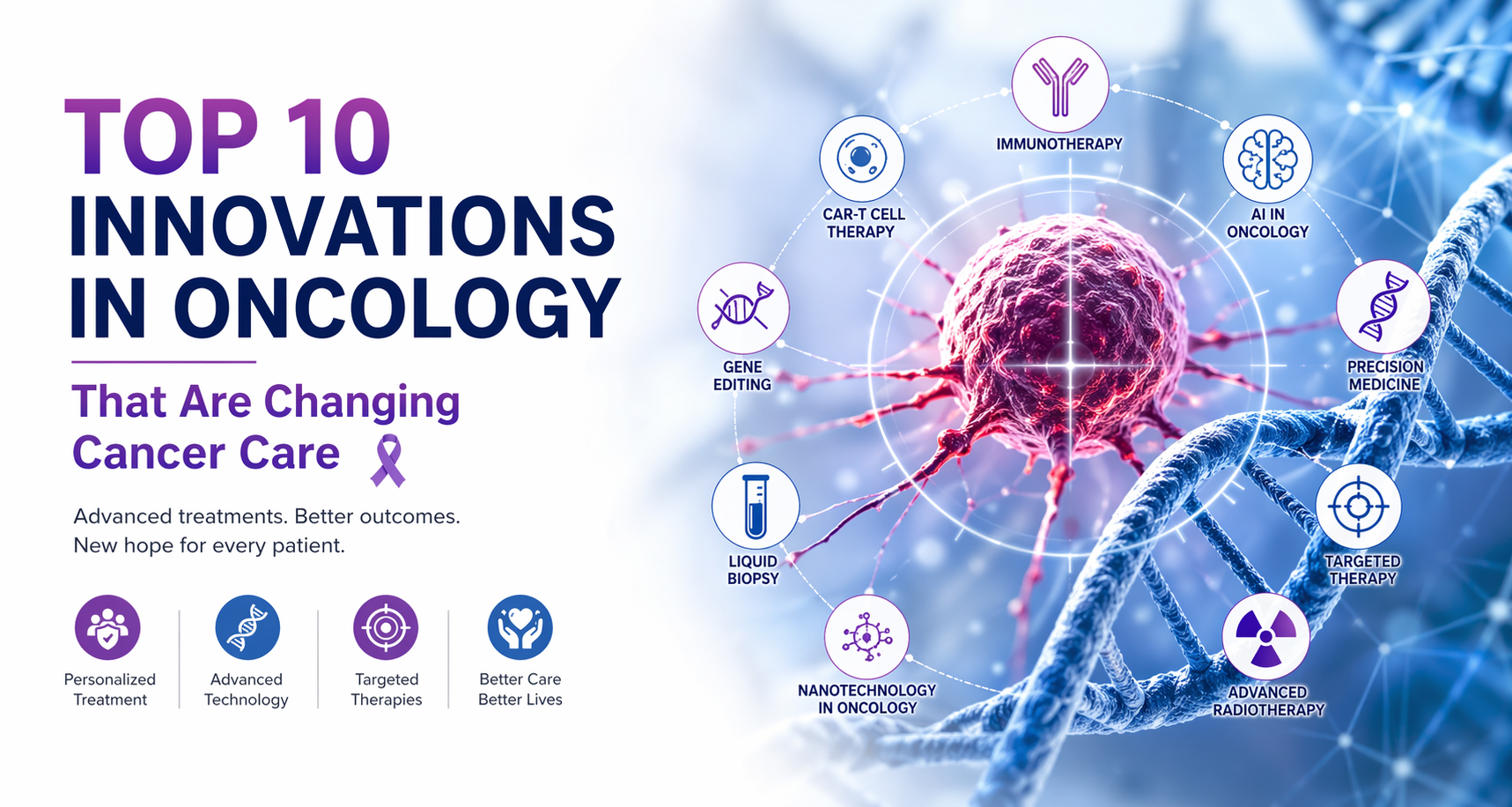
Top 10 Innovations in Oncology That Are Changing Cancer Care
Cancer care has entered a transformative era. Thanks to rapid advancements in Oncology, patients today have access to more precise, effective, and less invasive treatments than ever before. From personalized therapies to artificial intelligence, innovation is reshaping how cancer is diagnosed, treated, and managed.
In this blog, we explore the top 10 innovations in oncology that are revolutionizing cancer care in 2026.
Immunotherapy: Harnessing the Body’s Defense System
1. Immunotherapy: Harnessing the Body’s Defense System
One of the biggest breakthroughs in cancer treatment is Immunotherapy, which empowers the immune system to identify and destroy cancer cells.
Includes checkpoint inhibitors and immune modulators
Effective in cancers like melanoma, lung cancer, and more
Offers long-term survival benefits in some patients
This approach has significantly improved outcomes where traditional therapies had limited success.
2. CAR-T Cell Therapy: Personalized Immune Treatment
CAR-T Cell Therapy involves modifying a patient’s T-cells to attack cancer cells more effectively.
Highly successful in blood cancers like leukemia
Personalized treatment for each patient
Ongoing research for solid tumors
A game-changing therapy offering hope for previously untreatable cancers.
3. Precision Oncology: Tailored Treatment Plans
Precision Medicine uses genetic profiling to customize cancer treatment.
Targets specific mutations in cancer cells
Reduces side effects compared to chemotherapy
Improves treatment success rates
No more “one-size-fits-all”—treatment is now patient-specific.
4. Artificial Intelligence in Cancer Care
Artificial Intelligence in Healthcare is transforming how cancer is detected and treated.
Early detection through imaging analysis
Predictive analytics for treatment outcomes
Faster drug discovery
AI is helping doctors make faster and more accurate decisions.
5. Targeted Therapy: Precision at the Molecular Level
Targeted therapy focuses on specific molecules involved in cancer growth.
Blocks cancer cell signals
Minimizes damage to healthy cells
Often used alongside other treatments
A smarter alternative to traditional chemotherapy.
6. Antibody-Drug Conjugates (ADCs): Smart Chemotherapy
Antibody-Drug Conjugates combine antibodies with chemotherapy drugs.
Directly targets cancer cells
Reduces side effects
Increasingly used in breast and lung cancers
Delivers treatment exactly where it’s needed.
7. Radiotheranostics: Diagnosis + Therapy Combined
Radiotheranostics uses radioactive substances for both imaging and treatment.
Identifies cancer cells precisely
Delivers targeted radiation
Effective in prostate and neuroendocrine cancers
A powerful combination of diagnosis and treatment in one approach.
8. Gene Editing: The Role of CRISPR
CRISPR Gene Editing is opening new possibilities in cancer treatment.
Edits faulty genes causing cancer
Enhances immune cell effectiveness
Still in advanced research stages
Could redefine how we treat cancer at its root cause.
9. Liquid Biopsy: Non-Invasive Cancer Detection
Liquid Biopsy allows cancer detection through a simple blood test.
Detects cancer DNA in blood
Helps monitor treatment response
Enables early diagnosis
A less invasive and highly promising diagnostic tool.
10. Nanotechnology in Oncology
Nanotechnology in Medicine is improving drug delivery systems.
Targets tumors at microscopic levels
Enhances drug effectiveness
Reduces toxicity
A futuristic approach with immense potential.
Conclusion: The Future of Cancer Care
The field of oncology is evolving rapidly, offering new hope, better outcomes, and improved quality of life for patients. These innovations are not just advancements—they represent a shift toward more personalized, precise, and patient-friendly cancer care.
As research continues, the future may bring even more groundbreaking solutions, bringing us closer to a world where cancer is not just treatable - but potentially curable.
Immunotherapy: Harnessing the Body’s Defense System
1. Immunotherapy: Harnessing the Body’s Defense System
One of the biggest breakthroughs in cancer treatment is Immunotherapy, which empowers the immune system to identify and destroy cancer cells.
Includes checkpoint inhibitors and immune modulators
Effective in cancers like melanoma, lung cancer, and more
Offers long-term survival benefits in some patients
This approach has significantly improved outcomes where traditional therapies had limited success.
2. CAR-T Cell Therapy: Personalized Immune Treatment
CAR-T Cell Therapy involves modifying a patient’s T-cells to attack cancer cells more effectively.
Highly successful in blood cancers like leukemia
Personalized treatment for each patient
Ongoing research for solid tumors
A game-changing therapy offering hope for previously untreatable cancers.
3. Precision Oncology: Tailored Treatment Plans
Precision Medicine uses genetic profiling to customize cancer treatment.
Targets specific mutations in cancer cells
Reduces side effects compared to chemotherapy
Improves treatment success rates
No more “one-size-fits-all”—treatment is now patient-specific.
4. Artificial Intelligence in Cancer Care
Artificial Intelligence in Healthcare is transforming how cancer is detected and treated.
Early detection through imaging analysis
Predictive analytics for treatment outcomes
Faster drug discovery
AI is helping doctors make faster and more accurate decisions.
5. Targeted Therapy: Precision at the Molecular Level
Targeted therapy focuses on specific molecules involved in cancer growth.
Blocks cancer cell signals
Minimizes damage to healthy cells
Often used alongside other treatments
A smarter alternative to traditional chemotherapy.
6. Antibody-Drug Conjugates (ADCs): Smart Chemotherapy
Antibody-Drug Conjugates combine antibodies with chemotherapy drugs.
Directly targets cancer cells
Reduces side effects
Increasingly used in breast and lung cancers
Delivers treatment exactly where it’s needed.
7. Radiotheranostics: Diagnosis + Therapy Combined
Radiotheranostics uses radioactive substances for both imaging and treatment.
Identifies cancer cells precisely
Delivers targeted radiation
Effective in prostate and neuroendocrine cancers
A powerful combination of diagnosis and treatment in one approach.
8. Gene Editing: The Role of CRISPR
CRISPR Gene Editing is opening new possibilities in cancer treatment.
Edits faulty genes causing cancer
Enhances immune cell effectiveness
Still in advanced research stages
Could redefine how we treat cancer at its root cause.
9. Liquid Biopsy: Non-Invasive Cancer Detection
Liquid Biopsy allows cancer detection through a simple blood test.
Detects cancer DNA in blood
Helps monitor treatment response
Enables early diagnosis
A less invasive and highly promising diagnostic tool.
10. Nanotechnology in Oncology
Nanotechnology in Medicine is improving drug delivery systems.
Targets tumors at microscopic levels
Enhances drug effectiveness
Reduces toxicity
A futuristic approach with immense potential.
Conclusion: The Future of Cancer Care
The field of oncology is evolving rapidly, offering new hope, better outcomes, and improved quality of life for patients. These innovations are not just advancements—they represent a shift toward more personalized, precise, and patient-friendly cancer care.
As research continues, the future may bring even more groundbreaking solutions, bringing us closer to a world where cancer is not just treatable - but potentially curable.