Fitness & Weight Management
May 28, 2026
The Science Behind Fat Loss: What Really Happens Inside Your Body
Fat loss is one of the most talked-about topics in fitness and health—but also one of the most misunderstood. Many people believe fat loss is about sweating more, doing endless cardio, or following extreme diets.
In reality, fat loss is a scientific process happening inside your body at a cellular level. Understanding this process can help you lose fat more effectively and sustainably.
The Foundation: Calorie Deficit
At its core, fat loss comes down to one simple principle - calorie deficit.
In reality, fat loss is a scientific process happening inside your body at a cellular level. Understanding this process can help you lose fat more effectively and sustainably.
The Foundation: Calorie Deficit
At its core, fat loss comes down to one simple principle - calorie deficit.
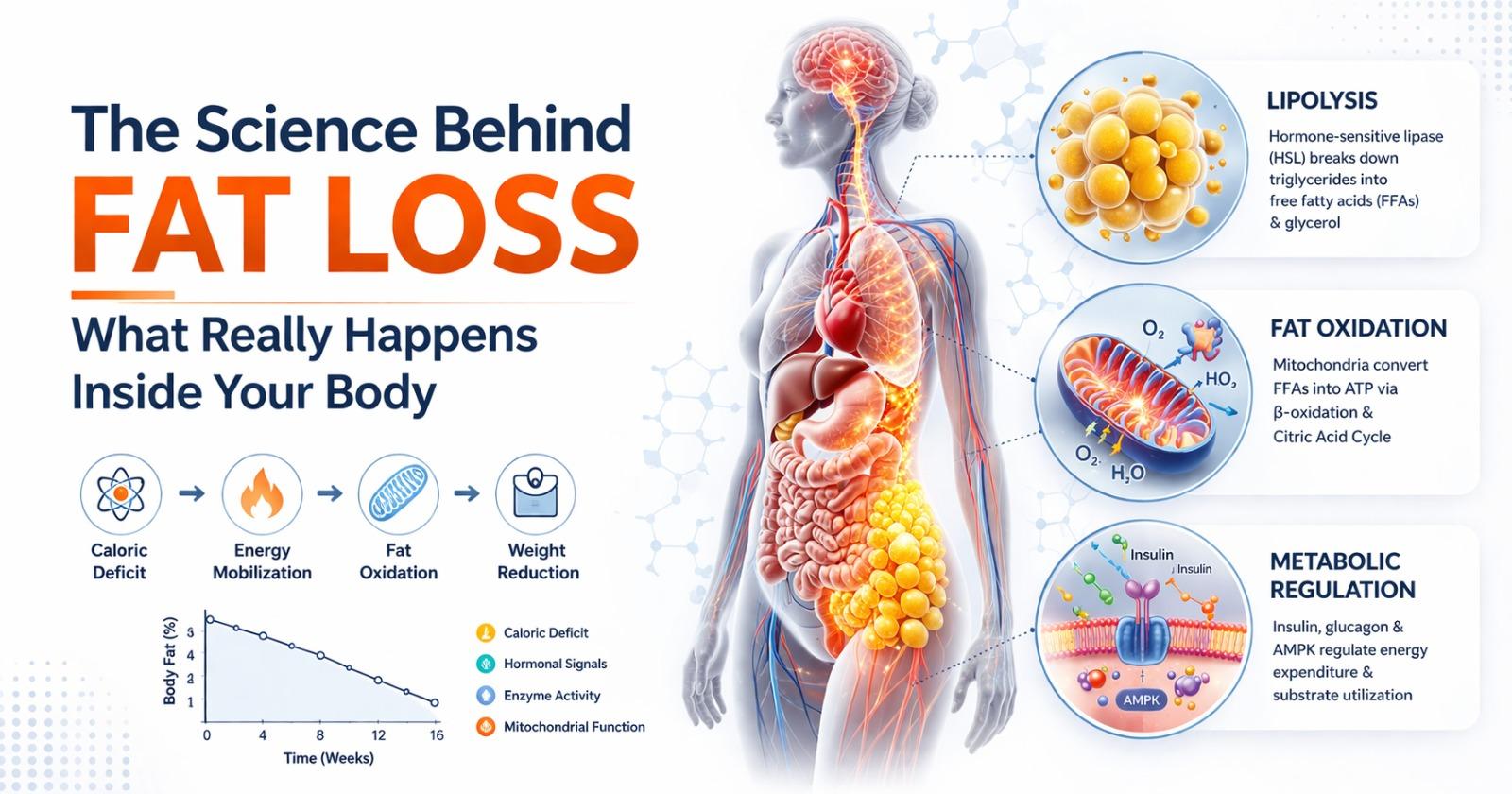
When your body burns more calories than it consumes, it needs extra energy. To meet this demand, your body starts using stored fat.
2. What Happens to Fat Inside Your Body?
Body fat is stored as triglycerides in fat cells. When your body needs energy, it breaks these down through a process called Lipolysis.
During this process:
Triglycerides → Fatty acids + Glycerol
These are released into the bloodstream
Then used for energy
The next step involves Cellular Respiration, where fat is converted into usable energy.
Interesting fact: Most fat leaves your body as carbon dioxide through breathing—not sweat!
3. The Role of Metabolism
Your metabolism determines how many calories your body burns daily.
It includes:
Basal Metabolic Rate (BMR)
Physical activity
Digestion (thermic effect of food)
A higher metabolism means your body burns more calories—even at rest—making fat loss easier.
4. Hormones: The Hidden Drivers of Fat Loss
Fat loss is not just about calories—your hormones play a huge role.
Insulin: High levels can reduce fat burning
Cortisol: Chronic stress promotes fat storage
Leptin: Helps control fullness
Ghrelin: Increases appetite
Balancing these hormones is key to sustainable fat loss.
5. Muscle vs Fat: Why It Matters
Muscle tissue burns more calories than fat—even when you're resting.
This means:
More muscle = higher metabolism
Higher metabolism = faster fat loss
That’s why strength training is essential if your goal is fat loss.
6. Exercise and Fat Burning
Exercise helps create a calorie deficit and improves overall health.
Best approach:
Strength Training → builds muscle
Cardio → burns calories
Combining both gives the best fat loss results.
7. Why You Might Not Be Losing Fat
Even when trying hard, many people struggle with fat loss. Common reasons include:
Not being in a true calorie deficit
Poor sleep
High stress levels
Inconsistent diet or workouts
Understanding the science helps you fix these issues effectively.
Conclusion
Fat loss is not magic—it’s science.
When you understand how your body burns fat, you can make smarter decisions about your diet, workouts, and lifestyle. Instead of chasing quick fixes, focus on sustainable, science-backed strategies.