General
May 29, 2026
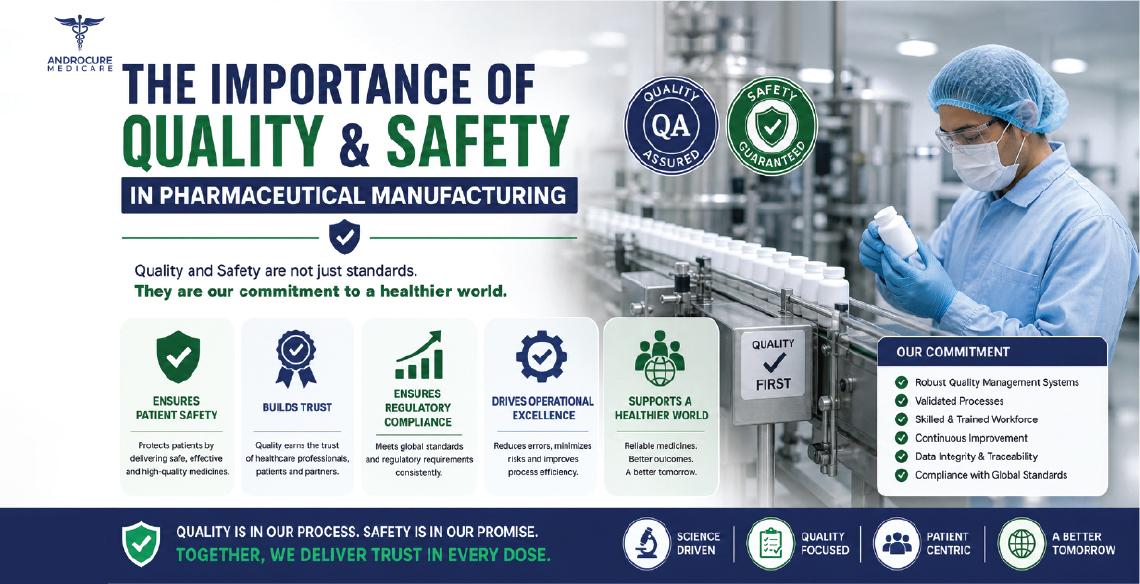
The Importance of Quality & Safety in Pharmaceutical Manufacturing
In the pharmaceutical industry, quality and safety are not just regulatory requirements — they are the foundation of trust, patient well-being, and healthcare excellence. Every medicine produced must meet strict standards to ensure it is safe, effective, and reliable for patients worldwide.
As the global healthcare industry continues to evolve, pharmaceutical manufacturers must focus on advanced quality control systems, safety protocols, compliance standards, and innovation-driven manufacturing practices. Companies committed to maintaining high-quality pharmaceutical production help improve healthcare outcomes while strengthening confidence among healthcare professionals and patients.
As the global healthcare industry continues to evolve, pharmaceutical manufacturers must focus on advanced quality control systems, safety protocols, compliance standards, and innovation-driven manufacturing practices. Companies committed to maintaining high-quality pharmaceutical production help improve healthcare outcomes while strengthening confidence among healthcare professionals and patients.
Why Quality Matters in Pharmaceutical Manufacturing
Quality in pharmaceutical manufacturing ensures that every product consistently meets defined standards for purity, strength, effectiveness, and safety. Poor manufacturing practices can lead to contamination, ineffective medicines, product recalls, and serious health risks.
High-quality pharmaceutical production helps:
Ensure patient safety
Maintain product consistency
Meet international regulatory standards
Build long-term brand credibility
Reduce manufacturing risks and recalls
Improve treatment effectiveness
Pharmaceutical companies that prioritize quality demonstrate responsibility toward global healthcare systems and patient care.
The Role of Safety in Pharmaceutical Production
Safety is a critical part of every stage of pharmaceutical manufacturing — from raw material sourcing to packaging and distribution. Strict safety measures help prevent contamination, cross-mixing, human errors, and equipment-related issues.
Modern pharmaceutical facilities follow comprehensive safety procedures such as:
1. GMP Compliance
Good Manufacturing Practices (GMP) ensure medicines are produced under controlled and hygienic conditions while maintaining quality consistency.
2. Quality Control Testing
Every batch undergoes multiple quality checks, including stability testing, microbiological testing, and formulation verification before market release.
3. Advanced Manufacturing Infrastructure
Modern automated machinery and controlled production environments minimize operational risks and improve production efficiency.
4. Trained Professionals
Experienced pharmacists, quality analysts, and production experts ensure every process follows strict industry protocols.
5. Safe Packaging Standards
Proper packaging protects medicines from moisture, contamination, and environmental damage while ensuring product integrity during transportation.
International Standards & Regulatory Compliance
Pharmaceutical manufacturers must comply with national and international healthcare regulations to maintain safety and quality standards. Regulatory compliance demonstrates a company’s commitment to ethical and reliable manufacturing practices.
Important compliance standards include:
WHO-GMP Certification
ISO Quality Standards
FDA Compliance
HACCP Standards
GLP & GMP Guidelines
These certifications help pharmaceutical companies expand globally while ensuring healthcare products meet international expectations.
How Technology Improves Pharmaceutical Quality
Technology is transforming pharmaceutical manufacturing through automation, digital monitoring, AI-driven analytics, and smart quality management systems.
Modern technologies help:
Improve manufacturing accuracy
Reduce human errors
Enhance batch traceability
Monitor production in real-time
Increase efficiency and productivity
Strengthen quality assurance systems
Digital innovation also supports faster issue detection and better compliance management in pharmaceutical operations.
The Impact of Quality on Patient Trust
Patients rely on pharmaceutical companies for safe and effective treatments. Consistent product quality builds trust among healthcare professionals, distributors, hospitals, and consumers.
A pharmaceutical company known for quality manufacturing gains:
Stronger market reputation
Higher customer confidence
Better healthcare partnerships
Long-term business sustainability
Increased global opportunities
In today’s competitive healthcare market, quality and safety are major factors that differentiate trusted pharmaceutical brands from others.
Androcure Medicare’s Commitment to Quality & Safety
At Androcure Medicare, quality and safety remain at the core of our pharmaceutical manufacturing approach. We focus on delivering healthcare solutions that meet strict industry standards while maintaining reliability, innovation, and customer trust.
Our commitment includes:
Advanced manufacturing practices
Strict quality control systems
Regulatory compliance standards
Reliable packaging solutions
Continuous process improvement
Customer-focused healthcare innovation
By maintaining high-quality pharmaceutical standards, we aim to contribute to safer healthcare solutions and long-term industry excellence.
Conclusion
Quality and safety are essential pillars of pharmaceutical manufacturing. From production and testing to packaging and distribution, every process must follow strict standards to protect patient health and ensure medicine effectiveness.
As healthcare demands continue to grow globally, pharmaceutical companies must invest in advanced technology, skilled professionals, regulatory compliance, and continuous quality improvement. Companies that prioritize safety and quality not only strengthen their market position but also play a vital role in improving global healthcare outcomes.
In the pharmaceutical industry, quality is not an option — it is a responsibility.
Quality in pharmaceutical manufacturing ensures that every product consistently meets defined standards for purity, strength, effectiveness, and safety. Poor manufacturing practices can lead to contamination, ineffective medicines, product recalls, and serious health risks.
High-quality pharmaceutical production helps:
Ensure patient safety
Maintain product consistency
Meet international regulatory standards
Build long-term brand credibility
Reduce manufacturing risks and recalls
Improve treatment effectiveness
Pharmaceutical companies that prioritize quality demonstrate responsibility toward global healthcare systems and patient care.
The Role of Safety in Pharmaceutical Production
Safety is a critical part of every stage of pharmaceutical manufacturing — from raw material sourcing to packaging and distribution. Strict safety measures help prevent contamination, cross-mixing, human errors, and equipment-related issues.
Modern pharmaceutical facilities follow comprehensive safety procedures such as:
1. GMP Compliance
Good Manufacturing Practices (GMP) ensure medicines are produced under controlled and hygienic conditions while maintaining quality consistency.
2. Quality Control Testing
Every batch undergoes multiple quality checks, including stability testing, microbiological testing, and formulation verification before market release.
3. Advanced Manufacturing Infrastructure
Modern automated machinery and controlled production environments minimize operational risks and improve production efficiency.
4. Trained Professionals
Experienced pharmacists, quality analysts, and production experts ensure every process follows strict industry protocols.
5. Safe Packaging Standards
Proper packaging protects medicines from moisture, contamination, and environmental damage while ensuring product integrity during transportation.
International Standards & Regulatory Compliance
Pharmaceutical manufacturers must comply with national and international healthcare regulations to maintain safety and quality standards. Regulatory compliance demonstrates a company’s commitment to ethical and reliable manufacturing practices.
Important compliance standards include:
WHO-GMP Certification
ISO Quality Standards
FDA Compliance
HACCP Standards
GLP & GMP Guidelines
These certifications help pharmaceutical companies expand globally while ensuring healthcare products meet international expectations.
How Technology Improves Pharmaceutical Quality
Technology is transforming pharmaceutical manufacturing through automation, digital monitoring, AI-driven analytics, and smart quality management systems.
Modern technologies help:
Improve manufacturing accuracy
Reduce human errors
Enhance batch traceability
Monitor production in real-time
Increase efficiency and productivity
Strengthen quality assurance systems
Digital innovation also supports faster issue detection and better compliance management in pharmaceutical operations.
The Impact of Quality on Patient Trust
Patients rely on pharmaceutical companies for safe and effective treatments. Consistent product quality builds trust among healthcare professionals, distributors, hospitals, and consumers.
A pharmaceutical company known for quality manufacturing gains:
Stronger market reputation
Higher customer confidence
Better healthcare partnerships
Long-term business sustainability
Increased global opportunities
In today’s competitive healthcare market, quality and safety are major factors that differentiate trusted pharmaceutical brands from others.
Androcure Medicare’s Commitment to Quality & Safety
At Androcure Medicare, quality and safety remain at the core of our pharmaceutical manufacturing approach. We focus on delivering healthcare solutions that meet strict industry standards while maintaining reliability, innovation, and customer trust.
Our commitment includes:
Advanced manufacturing practices
Strict quality control systems
Regulatory compliance standards
Reliable packaging solutions
Continuous process improvement
Customer-focused healthcare innovation
By maintaining high-quality pharmaceutical standards, we aim to contribute to safer healthcare solutions and long-term industry excellence.
Conclusion
Quality and safety are essential pillars of pharmaceutical manufacturing. From production and testing to packaging and distribution, every process must follow strict standards to protect patient health and ensure medicine effectiveness.
As healthcare demands continue to grow globally, pharmaceutical companies must invest in advanced technology, skilled professionals, regulatory compliance, and continuous quality improvement. Companies that prioritize safety and quality not only strengthen their market position but also play a vital role in improving global healthcare outcomes.
In the pharmaceutical industry, quality is not an option — it is a responsibility.