Health & Wellness
May 28, 2026
Emergency First Aid Tips Everyone Should Know
Medical emergencies can happen anytime and anywhere — at home, at work, on the road, or during travel. Knowing basic first aid can help save lives, reduce complications, and provide immediate support until professional medical assistance arrives.
At Androcure Medicare, we believe healthcare awareness is just as important as medical treatment. Understanding simple emergency first aid techniques can make a critical difference during unexpected situations.
At Androcure Medicare, we believe healthcare awareness is just as important as medical treatment. Understanding simple emergency first aid techniques can make a critical difference during unexpected situations.
What is First Aid?
First aid refers to the immediate care given to an injured or ill person before professional medical treatment becomes available. The primary goals of first aid are:
Preserve life
Prevent the condition from worsening
Promote recovery
Provide temporary relief
Even basic first aid knowledge can help manage emergencies effectively.
1. CPR (Cardiopulmonary Resuscitation)
CPR is a life-saving technique used when someone’s heartbeat or breathing has stopped.
Steps for CPR:
Check if the person is responsive.
Call emergency medical services immediately.
Place the person on a firm surface.
Begin chest compressions:
Push hard and fast in the center of the chest
Around 100–120 compressions per minute
Give rescue breaths if trained.
CPR can significantly improve survival chances during cardiac arrest emergencies.
2. How to Handle Severe Bleeding
Heavy bleeding requires immediate action to prevent excessive blood loss.
What to Do:
Apply direct pressure using a clean cloth or bandage
Elevate the injured area if possible
Avoid removing embedded objects
Keep pressure steady until medical help arrives
Seek professional medical care immediately for deep wounds or uncontrolled bleeding.
3. First Aid for Burns
Burn injuries can range from mild to severe.
Immediate Burn Care:
Cool the burn under running water for 10–20 minutes
Remove tight items like rings or watches
Cover the burn with a sterile non-stick dressing
Avoid applying ice, butter, or toothpaste
Serious burns require urgent medical attention.
4. Choking Emergency Response
Choking can block airflow and quickly become life-threatening.
Signs of Choking:
Difficulty speaking
Inability to breathe
Blue lips or face
Clutching the throat
What to Do:
Encourage coughing if possible
Perform abdominal thrusts (Heimlich maneuver)
Call emergency services if the blockage continues
Quick action is essential during choking emergencies.
5. Managing Fractures and Sprains
Broken bones and sprains should be handled carefully to avoid further injury.
First Aid Tips:
Immobilize the injured area
Apply ice packs to reduce swelling
Avoid moving the affected limb unnecessarily
Use a splint if trained
Always seek medical evaluation for suspected fractures.
6. Dealing with Fainting
Fainting can occur due to dehydration, stress, low blood sugar, or medical conditions.
What You Should Do:
Lay the person flat on their back
Raise their legs slightly
Loosen tight clothing
Ensure fresh airflow
Offer water once fully conscious
If fainting lasts more than a minute or occurs repeatedly, seek medical assistance.
7. First Aid for Nosebleeds
Nosebleeds are common but can be alarming.
Correct Way to Stop a Nosebleed:
Sit upright and lean slightly forward
Pinch the soft part of the nose
Hold pressure for 10–15 minutes
Avoid tilting the head backward
Persistent bleeding requires medical attention.
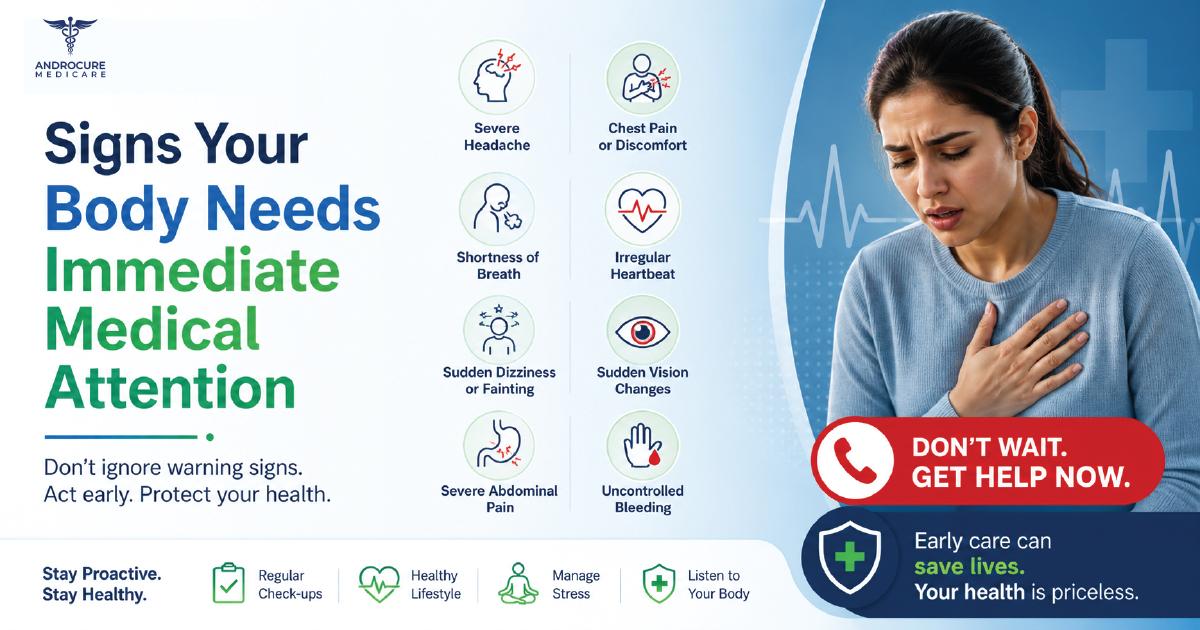
8. Recognizing Signs of a Heart Attack
Early recognition can save lives.
Common Symptoms:
Chest pain or pressure
Shortness of breath
Pain in arms, jaw, or back
Sweating and dizziness
Immediate Action:
Call emergency services immediately
Keep the person calm and seated
Loosen tight clothing
Provide aspirin only if medically appropriate
Never ignore possible heart attack symptoms.
Why First Aid Knowledge Matters
Learning emergency first aid:
Helps save lives
Reduces injury severity
Increases confidence during emergencies
Supports community safety
Basic first aid training is highly recommended for everyone.
Final Thoughts
Emergencies often happen without warning, and the first few minutes are critical. Having basic first aid knowledge allows you to respond quickly and responsibly while waiting for professional medical help.
At Androcure Medicare, we are committed to promoting healthcare awareness, medical education, and global wellness through reliable healthcare solutions and informative medical content.
First aid refers to the immediate care given to an injured or ill person before professional medical treatment becomes available. The primary goals of first aid are:
Preserve life
Prevent the condition from worsening
Promote recovery
Provide temporary relief
Even basic first aid knowledge can help manage emergencies effectively.
1. CPR (Cardiopulmonary Resuscitation)
CPR is a life-saving technique used when someone’s heartbeat or breathing has stopped.
Steps for CPR:
Check if the person is responsive.
Call emergency medical services immediately.
Place the person on a firm surface.
Begin chest compressions:
Push hard and fast in the center of the chest
Around 100–120 compressions per minute
Give rescue breaths if trained.
CPR can significantly improve survival chances during cardiac arrest emergencies.
2. How to Handle Severe Bleeding
Heavy bleeding requires immediate action to prevent excessive blood loss.
What to Do:
Apply direct pressure using a clean cloth or bandage
Elevate the injured area if possible
Avoid removing embedded objects
Keep pressure steady until medical help arrives
Seek professional medical care immediately for deep wounds or uncontrolled bleeding.
3. First Aid for Burns
Burn injuries can range from mild to severe.
Immediate Burn Care:
Cool the burn under running water for 10–20 minutes
Remove tight items like rings or watches
Cover the burn with a sterile non-stick dressing
Avoid applying ice, butter, or toothpaste
Serious burns require urgent medical attention.
4. Choking Emergency Response
Choking can block airflow and quickly become life-threatening.
Signs of Choking:
Difficulty speaking
Inability to breathe
Blue lips or face
Clutching the throat
What to Do:
Encourage coughing if possible
Perform abdominal thrusts (Heimlich maneuver)
Call emergency services if the blockage continues
Quick action is essential during choking emergencies.
5. Managing Fractures and Sprains
Broken bones and sprains should be handled carefully to avoid further injury.
First Aid Tips:
Immobilize the injured area
Apply ice packs to reduce swelling
Avoid moving the affected limb unnecessarily
Use a splint if trained
Always seek medical evaluation for suspected fractures.
6. Dealing with Fainting
Fainting can occur due to dehydration, stress, low blood sugar, or medical conditions.
What You Should Do:
Lay the person flat on their back
Raise their legs slightly
Loosen tight clothing
Ensure fresh airflow
Offer water once fully conscious
If fainting lasts more than a minute or occurs repeatedly, seek medical assistance.
7. First Aid for Nosebleeds
Nosebleeds are common but can be alarming.
Correct Way to Stop a Nosebleed:
Sit upright and lean slightly forward
Pinch the soft part of the nose
Hold pressure for 10–15 minutes
Avoid tilting the head backward
Persistent bleeding requires medical attention.
8. Recognizing Signs of a Heart Attack
Early recognition can save lives.
Common Symptoms:
Chest pain or pressure
Shortness of breath
Pain in arms, jaw, or back
Sweating and dizziness
Immediate Action:
Call emergency services immediately
Keep the person calm and seated
Loosen tight clothing
Provide aspirin only if medically appropriate
Never ignore possible heart attack symptoms.
Why First Aid Knowledge Matters
Learning emergency first aid:
Helps save lives
Reduces injury severity
Increases confidence during emergencies
Supports community safety
Basic first aid training is highly recommended for everyone.
Final Thoughts
Emergencies often happen without warning, and the first few minutes are critical. Having basic first aid knowledge allows you to respond quickly and responsibly while waiting for professional medical help.
At Androcure Medicare, we are committed to promoting healthcare awareness, medical education, and global wellness through reliable healthcare solutions and informative medical content.