Respiratory Health
May 28, 2026
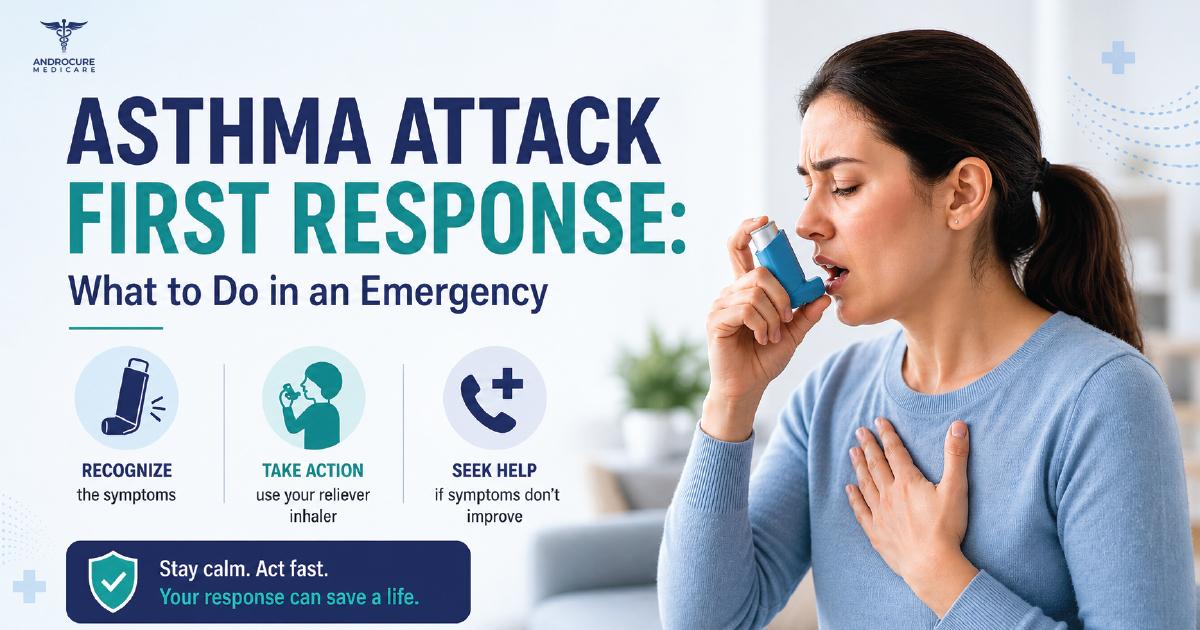
Asthma Attack First Response: What to Do in an Emergency
Asthma attacks can happen suddenly and become life-threatening if immediate action is not taken. Knowing the correct first response during an asthma emergency can help reduce complications and provide relief until medical help arrives.
Asthma affects millions of people worldwide and is commonly triggered by allergens, pollution, smoke, infections, stress, or physical activity. Quick recognition of symptoms and proper emergency response are essential for patient safety.
At Androcure Medicare, we believe that spreading awareness about respiratory health and emergency care can help save lives and improve patient outcomes globally.
Asthma affects millions of people worldwide and is commonly triggered by allergens, pollution, smoke, infections, stress, or physical activity. Quick recognition of symptoms and proper emergency response are essential for patient safety.
At Androcure Medicare, we believe that spreading awareness about respiratory health and emergency care can help save lives and improve patient outcomes globally.
What Is an Asthma Attack?
An asthma attack occurs when the airways become inflamed, swollen, and narrow, making it difficult to breathe. Excess mucus production can further block airflow, causing severe breathing discomfort.
Common Symptoms of an Asthma Attack
Shortness of breath
Wheezing or whistling sound while breathing
Tightness in the chest
Persistent coughing
Difficulty speaking
Rapid breathing
Anxiety or panic
Bluish lips or fingernails in severe cases
Recognizing these symptoms early can help prevent the condition from worsening.
First Response During an Asthma Attack
1. Stay Calm and Help the Person Sit Upright
Panic can worsen breathing difficulties. Help the person sit upright in a comfortable position and encourage slow, steady breathing.
Avoid lying down, as it may make breathing harder.
2. Use a Quick-Relief Inhaler Immediately
A rescue inhaler such as a bronchodilator should be used as soon as symptoms appear.
Typical emergency use:
1 puff at a time
Wait 30–60 seconds between puffs
Usually up to 4 puffs initially
Always follow the doctor’s prescribed instructions.
3. Loosen Tight Clothing
Remove or loosen anything around the neck or chest that may restrict breathing.
4. Move Away From Triggers
If possible, remove the person from smoke, dust, strong odors, pollution, or allergens that may have triggered the attack.
5. Monitor Symptoms Carefully
Watch for warning signs such as:
Severe breathing difficulty
Trouble talking
Blue lips or fingertips
No improvement after inhaler use
These signs indicate a medical emergency.
6. Seek Emergency Medical Help
Call emergency medical services immediately if:
Symptoms worsen rapidly
The inhaler does not provide relief
The person becomes unconscious
Breathing becomes extremely difficult
Do not delay professional medical assistance during severe asthma attacks.
What NOT to Do During an Asthma Attack
Do not ignore worsening symptoms
Do not make the person lie flat
Do not give random medications without medical advice
Do not panic or crowd the patient
Do not delay emergency treatment
Tips to Prevent Asthma Attacks
Avoid Common Triggers
Common triggers include:
Dust
Smoke
Pet dander
Pollen
Cold air
Strong perfumes
Respiratory infections
Follow Prescribed Medication Plans
Patients should take preventive medications regularly as prescribed by healthcare professionals.
Carry an Inhaler at All Times
People with asthma should always keep their rescue inhaler accessible, especially while traveling or exercising.
Schedule Regular Health Checkups
Routine monitoring can help manage asthma effectively and reduce emergency situations.
Importance of Asthma Awareness
Educating families, caregivers, schools, and workplaces about asthma first aid can significantly improve emergency response and patient safety.
Healthcare awareness initiatives and access to quality respiratory care are essential in reducing asthma-related complications worldwide.
At Androcure Medicare, we are committed to supporting healthcare awareness through reliable pharmaceutical solutions and educational health content designed to promote better patient care globally.
Conclusion
Asthma attacks require immediate attention and the correct first response. Staying calm, using a rescue inhaler, avoiding triggers, and seeking medical help when necessary can make a critical difference during an emergency.
Understanding asthma first aid not only helps patients but also empowers families and caregivers to respond confidently in life-threatening situations.
An asthma attack occurs when the airways become inflamed, swollen, and narrow, making it difficult to breathe. Excess mucus production can further block airflow, causing severe breathing discomfort.
Common Symptoms of an Asthma Attack
Shortness of breath
Wheezing or whistling sound while breathing
Tightness in the chest
Persistent coughing
Difficulty speaking
Rapid breathing
Anxiety or panic
Bluish lips or fingernails in severe cases
Recognizing these symptoms early can help prevent the condition from worsening.
First Response During an Asthma Attack
1. Stay Calm and Help the Person Sit Upright
Panic can worsen breathing difficulties. Help the person sit upright in a comfortable position and encourage slow, steady breathing.
Avoid lying down, as it may make breathing harder.
2. Use a Quick-Relief Inhaler Immediately
A rescue inhaler such as a bronchodilator should be used as soon as symptoms appear.
Typical emergency use:
1 puff at a time
Wait 30–60 seconds between puffs
Usually up to 4 puffs initially
Always follow the doctor’s prescribed instructions.
3. Loosen Tight Clothing
Remove or loosen anything around the neck or chest that may restrict breathing.
4. Move Away From Triggers
If possible, remove the person from smoke, dust, strong odors, pollution, or allergens that may have triggered the attack.
5. Monitor Symptoms Carefully
Watch for warning signs such as:
Severe breathing difficulty
Trouble talking
Blue lips or fingertips
No improvement after inhaler use
These signs indicate a medical emergency.
6. Seek Emergency Medical Help
Call emergency medical services immediately if:
Symptoms worsen rapidly
The inhaler does not provide relief
The person becomes unconscious
Breathing becomes extremely difficult
Do not delay professional medical assistance during severe asthma attacks.
What NOT to Do During an Asthma Attack
Do not ignore worsening symptoms
Do not make the person lie flat
Do not give random medications without medical advice
Do not panic or crowd the patient
Do not delay emergency treatment
Tips to Prevent Asthma Attacks
Avoid Common Triggers
Common triggers include:
Dust
Smoke
Pet dander
Pollen
Cold air
Strong perfumes
Respiratory infections
Follow Prescribed Medication Plans
Patients should take preventive medications regularly as prescribed by healthcare professionals.
Carry an Inhaler at All Times
People with asthma should always keep their rescue inhaler accessible, especially while traveling or exercising.
Schedule Regular Health Checkups
Routine monitoring can help manage asthma effectively and reduce emergency situations.
Importance of Asthma Awareness
Educating families, caregivers, schools, and workplaces about asthma first aid can significantly improve emergency response and patient safety.
Healthcare awareness initiatives and access to quality respiratory care are essential in reducing asthma-related complications worldwide.
At Androcure Medicare, we are committed to supporting healthcare awareness through reliable pharmaceutical solutions and educational health content designed to promote better patient care globally.
Conclusion
Asthma attacks require immediate attention and the correct first response. Staying calm, using a rescue inhaler, avoiding triggers, and seeking medical help when necessary can make a critical difference during an emergency.
Understanding asthma first aid not only helps patients but also empowers families and caregivers to respond confidently in life-threatening situations.