Health & Wellness
May 28, 2026
Understanding Antibiotics: Uses, Side Effects & Safety Tips
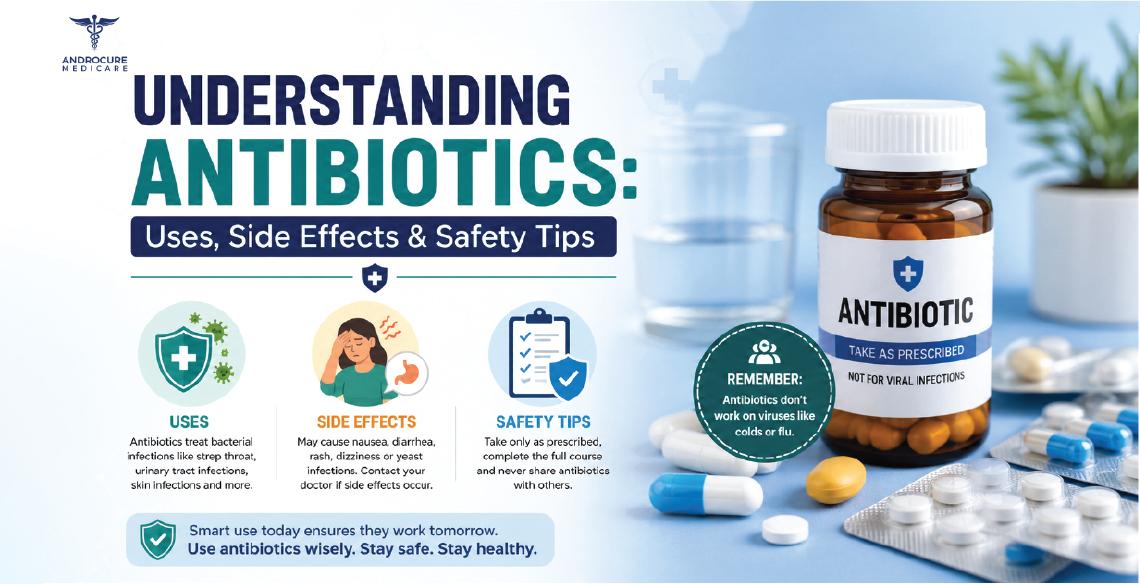
Antibiotics are among the most important medicines used in modern healthcare. They help treat bacterial infections and have saved millions of lives worldwide. However, misuse and overuse of antibiotics can lead to serious health concerns, including antibiotic resistance. Understanding how antibiotics work, their uses, possible side effects, and proper safety practices is essential for maintaining good health.
What Are Antibiotics?
Antibiotics are medicines designed to kill or stop the growth of bacteria in the body. They are used to treat bacterial infections such as:
Throat infections
Urinary tract infections (UTIs)
Pneumonia
Skin infections
Ear infections
It is important to know that antibiotics do not work against viral infections like the common cold, flu, or most coughs.
How Do Antibiotics Work?
Antibiotics work by targeting bacteria in different ways. Some antibiotics destroy bacterial cell walls, while others stop bacteria from multiplying. This helps the immune system eliminate the infection more effectively.
Different antibiotics are prescribed depending on the type of infection and the bacteria causing it.
Common Types of Antibiotics
Penicillins
Used for throat infections, skin infections, and respiratory infections.
Macrolides
Often prescribed for chest infections and in patients allergic to penicillin.
Tetracyclines
Used for acne, respiratory infections, and certain skin conditions.
Fluoroquinolones
Used for more serious bacterial infections.
Doctors choose antibiotics based on medical history, symptoms, and infection severity.
Common Uses of Antibiotics
Antibiotics are commonly used to treat:
Bacterial throat infections
Sinus infections
Dental infections
Skin infections
Sexually transmitted bacterial infections
Bacterial stomach infections
They may also be prescribed after surgeries to prevent infections.
Possible Side Effects of Antibiotics
Like all medicines, antibiotics can cause side effects. Most are mild, but some may require medical attention.
Common Side Effects
Nausea
Vomiting
Diarrhea
Stomach pain
Headache
Skin rash
Serious Side Effects
Severe allergic reactions
Breathing difficulty
Swelling of the face or throat
Severe diarrhea
Liver problems
Seek medical help immediately if severe reactions occur.
Why Antibiotic Resistance Is Dangerous
One of the biggest global health concerns today is antibiotic resistance. This happens when bacteria adapt and become resistant to antibiotics, making infections harder to treat.
Causes of Antibiotic Resistance
Taking antibiotics unnecessarily
Not completing the full course
Self-medication
Overuse of antibiotics
Antibiotic resistance can make simple infections dangerous and difficult to cure.
Important Safety Tips When Using Antibiotics
Always Follow Your Doctor’s Prescription
Take antibiotics exactly as prescribed.
Complete the Full Course
Even if you feel better, finish the entire course to fully eliminate bacteria.
Never Share Antibiotics
Medicines prescribed for someone else may not be suitable for your condition.
Avoid Self-Medication
Do not buy antibiotics without proper medical advice.
Take Medicines on Time
Follow the correct dosage schedule for effective treatment.
Inform Your Doctor About Allergies
Always mention any history of drug allergies before starting antibiotics.
Can Antibiotics Affect Digestion?
Yes, antibiotics can sometimes affect healthy bacteria in the gut, leading to digestive issues.
Tips to Support Gut Health
Eat yogurt or probiotic foods
Stay hydrated
Maintain a balanced diet
These may help reduce digestive discomfort during antibiotic treatment.
When Should You See a Doctor?
Consult a healthcare professional if:
Symptoms worsen
Fever continues
Side effects become severe
You experience allergic reactions
Infection does not improve after treatment
Early medical guidance helps prevent complications.
Final Thoughts
Antibiotics are powerful medicines that play a crucial role in fighting bacterial infections. However, responsible use is extremely important to protect both individual health and public safety. Taking antibiotics correctly, understanding their side effects, and avoiding unnecessary use can help prevent antibiotic resistance and ensure these medicines remain effective in the future.
Always use antibiotics under professional medical guidance and prioritize safe medication practices.
FAQs
Do antibiotics work for viral infections?
No, antibiotics only work against bacterial infections, not viruses like the flu or common cold.
Can I stop antibiotics when I feel better?
No, always complete the full prescribed course unless your doctor advises otherwise.
What should I avoid while taking antibiotics?
Avoid alcohol if advised by your doctor and do not skip doses.
Are antibiotics safe for everyone?
Some people may have allergies or medical conditions that require special precautions. Always consult a doctor before use.
Antibiotics are medicines designed to kill or stop the growth of bacteria in the body. They are used to treat bacterial infections such as:
Throat infections
Urinary tract infections (UTIs)
Pneumonia
Skin infections
Ear infections
It is important to know that antibiotics do not work against viral infections like the common cold, flu, or most coughs.
How Do Antibiotics Work?
Antibiotics work by targeting bacteria in different ways. Some antibiotics destroy bacterial cell walls, while others stop bacteria from multiplying. This helps the immune system eliminate the infection more effectively.
Different antibiotics are prescribed depending on the type of infection and the bacteria causing it.
Common Types of Antibiotics
Penicillins
Used for throat infections, skin infections, and respiratory infections.
Macrolides
Often prescribed for chest infections and in patients allergic to penicillin.
Tetracyclines
Used for acne, respiratory infections, and certain skin conditions.
Fluoroquinolones
Used for more serious bacterial infections.
Doctors choose antibiotics based on medical history, symptoms, and infection severity.
Common Uses of Antibiotics
Antibiotics are commonly used to treat:
Bacterial throat infections
Sinus infections
Dental infections
Skin infections
Sexually transmitted bacterial infections
Bacterial stomach infections
They may also be prescribed after surgeries to prevent infections.
Possible Side Effects of Antibiotics
Like all medicines, antibiotics can cause side effects. Most are mild, but some may require medical attention.
Common Side Effects
Nausea
Vomiting
Diarrhea
Stomach pain
Headache
Skin rash
Serious Side Effects
Severe allergic reactions
Breathing difficulty
Swelling of the face or throat
Severe diarrhea
Liver problems
Seek medical help immediately if severe reactions occur.
Why Antibiotic Resistance Is Dangerous
One of the biggest global health concerns today is antibiotic resistance. This happens when bacteria adapt and become resistant to antibiotics, making infections harder to treat.
Causes of Antibiotic Resistance
Taking antibiotics unnecessarily
Not completing the full course
Self-medication
Overuse of antibiotics
Antibiotic resistance can make simple infections dangerous and difficult to cure.
Important Safety Tips When Using Antibiotics
Always Follow Your Doctor’s Prescription
Take antibiotics exactly as prescribed.
Complete the Full Course
Even if you feel better, finish the entire course to fully eliminate bacteria.
Never Share Antibiotics
Medicines prescribed for someone else may not be suitable for your condition.
Avoid Self-Medication
Do not buy antibiotics without proper medical advice.
Take Medicines on Time
Follow the correct dosage schedule for effective treatment.
Inform Your Doctor About Allergies
Always mention any history of drug allergies before starting antibiotics.
Can Antibiotics Affect Digestion?
Yes, antibiotics can sometimes affect healthy bacteria in the gut, leading to digestive issues.
Tips to Support Gut Health
Eat yogurt or probiotic foods
Stay hydrated
Maintain a balanced diet
These may help reduce digestive discomfort during antibiotic treatment.
When Should You See a Doctor?
Consult a healthcare professional if:
Symptoms worsen
Fever continues
Side effects become severe
You experience allergic reactions
Infection does not improve after treatment
Early medical guidance helps prevent complications.
Final Thoughts
Antibiotics are powerful medicines that play a crucial role in fighting bacterial infections. However, responsible use is extremely important to protect both individual health and public safety. Taking antibiotics correctly, understanding their side effects, and avoiding unnecessary use can help prevent antibiotic resistance and ensure these medicines remain effective in the future.
Always use antibiotics under professional medical guidance and prioritize safe medication practices.
FAQs
Do antibiotics work for viral infections?
No, antibiotics only work against bacterial infections, not viruses like the flu or common cold.
Can I stop antibiotics when I feel better?
No, always complete the full prescribed course unless your doctor advises otherwise.
What should I avoid while taking antibiotics?
Avoid alcohol if advised by your doctor and do not skip doses.
Are antibiotics safe for everyone?
Some people may have allergies or medical conditions that require special precautions. Always consult a doctor before use.